
By Jeremy
Published August 10, 2026
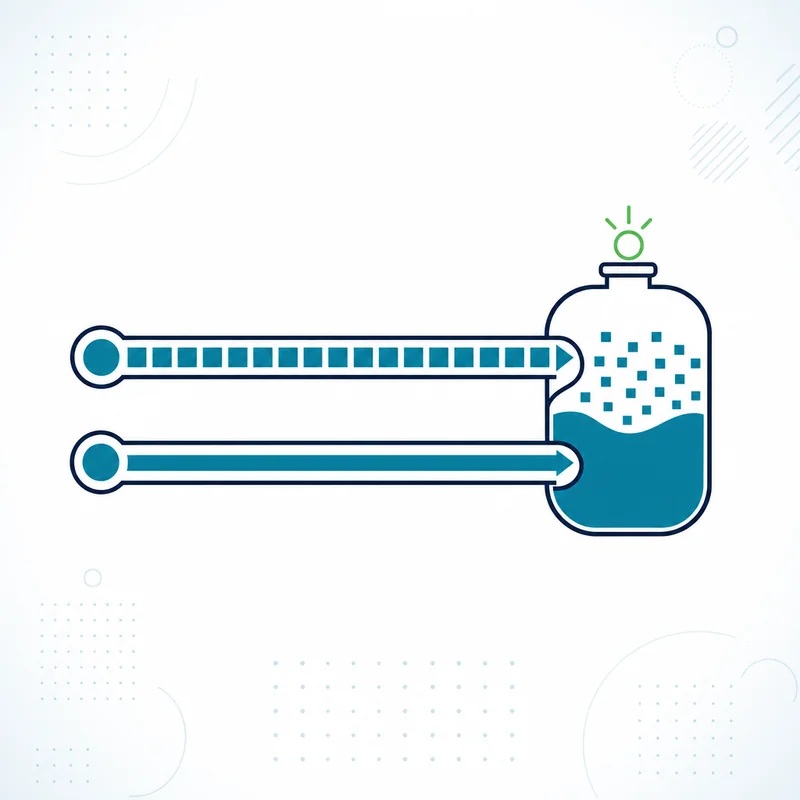
ACH is a bank-to-bank transfer that moves money directly between accounts instead of over the card networks. For merchants, the practical difference is cost structure: ACH is usually priced as a flat amount per transaction, while card acceptance is priced mostly as a percentage of the sale. That makes ACH most valuable on large invoices and recurring billing.
That single sentence about pricing structure is the whole decision. Everything below is about when the structure works in your favor, when it does not, and what you take on operationally if you add it.
What ACH Actually Is
ACH stands for Automated Clearing House, the network US banks use to move money between accounts in batches. It is the same rail behind direct deposit and most recurring bill payments. When a business collects by ACH, it is either pulling funds from a customer’s account with permission, or receiving a push the customer initiates.
- ACH debit: You initiate the transfer and pull funds from your customer’s bank account, which is the model behind most recurring and invoice collection.
- ACH credit: Your customer initiates the transfer and pushes funds to you, which is how many businesses already pay each other today.
- Not a card transaction: ACH does not run over Visa, Mastercard, Discover or American Express, so interchange does not apply to it at all.
- Not a wire: Wires move individually and generally settle much faster at a much higher cost, while ACH moves in batches at low cost.
- Not instant by default: ACH is a batch system, so the money arrives on a schedule rather than at the moment of sale.
The Cost Mechanic: Flat Fee Versus Percentage

This is the part worth understanding before anything else, because it explains every situation where ACH wins and every situation where it does not.
Card pricing is dominated by a percentage of the sale. A larger sale costs proportionally more to accept. ACH pricing is commonly structured as a flat amount per transaction, and in some programs as a percentage with a ceiling, so the cost stops climbing once the transaction passes a certain size. On a small ticket the percentage is small and a flat fee can easily be the more expensive option. On a large invoice the percentage keeps growing and the flat fee does not.
| Dimension | Card acceptance | ACH |
|---|---|---|
| Primary cost driver | A percentage of the sale amount, plus a small per-item component | Commonly a flat amount per transaction, sometimes a percentage with a cap |
| Effect of a bigger ticket | Cost rises roughly in proportion to the sale | Cost stays flat or stops rising once a cap is reached |
| Underlying pass-through | Interchange and card-brand assessments, set by the card brands | Network and bank costs, with no interchange component |
| Speed at the point of sale | Authorization is immediate, funding follows on a batch cycle | No real-time authorization of funds, and settlement runs on a batch cycle |
| Customer experience | Familiar, works for walk-in and one-time buyers, supports rewards | Requires bank details and permission, better suited to known, repeat payers |
| Reversal mechanism | Chargebacks, governed by card-brand rules | Returns, governed by ACH network rules |
Cost comparison by average ticket
Illustrative arithmetic only. The figures in the table below are invented round numbers chosen to demonstrate how a flat fee behaves against a percentage. They are not PayPoint Systems pricing, not market rates, not a quote, and not a savings claim. Your actual card cost depends on your pricing model, card mix and interchange, and your actual ACH cost depends on the program you are on.
| Average ticket | Illustrative card cost at 3 percent | Illustrative ACH cost at 1 dollar flat | Cheaper in this illustration | What actually decides it in practice |
|---|---|---|---|---|
| $15 | $0.45 | $1.00 | Card | Small tickets favor a percentage. A flat fee is a large share of a small sale. |
| $50 | $1.50 | $1.00 | Roughly even | Near the crossover, convenience and payment speed matter more than cost. |
| $250 | $7.50 | $1.00 | ACH | The gap becomes real, but only if the customer will actually pay this way. |
| $1,000 | $30.00 | $1.00 | ACH | Invoice-sized tickets are where ACH starts to change the economics. |
| $5,000 | $150.00 | $1.00 | ACH | At this size the percentage dominates everything else on the statement. |
| $25,000 | $750.00 | $1.00 | ACH | Many businesses this size are already being paid by check or bank transfer. |
In the illustration above, the crossover lands near a 33 dollar ticket, because that is where 3 percent of the sale equals 1 dollar. Change either assumption and the crossover moves. The point is not the number. The point is that a percentage and a flat fee cross somewhere, and knowing roughly where yours crosses is the entire analysis.
To run this on your own numbers you need your effective rate, which is total fees divided by total card volume, not the headline rate you were quoted. A dedicated guide to the difference between an effective rate and a headline rate is planned as a companion to this page.
Is ACH Right for Your Business?
ACH is a fit for some businesses and a distraction for others. Work down this table and count which column you land in more often.
| Signal in your business | Points toward adding ACH | Points toward staying card-only |
|---|---|---|
| Average ticket | Hundreds or thousands of dollars | Under a few dozen dollars |
| Who your customers are | Other businesses, or clients on standing accounts | Walk-in consumers you may never see again |
| How often the same customer pays | Monthly, quarterly, or on a contract schedule | Once, or unpredictably |
| How you bill | Invoices with terms, or scheduled billing | Payment at a counter at the time of sale |
| What you are being paid with today | Paper checks you have to deposit and chase | Cards and digital wallets, with no friction |
| Tolerance for delayed settlement | You can wait a few business days for funds | You need the money to land quickly and predictably |
| Willingness to run a returns process | You have someone who can handle failed payments | Nobody has bandwidth to chase a returned payment |
| Customer relationship | Customers know you and will share bank details | Customers would hesitate to hand over bank details |
Reading the result. Mostly left column means ACH is worth a serious conversation, and the businesses that land there most often are wholesale, distribution, professional services, trades with contract work, and anyone billing on a schedule. Mostly right column means ACH will add operational work without moving your costs, and your time is better spent on how your card pricing is structured. A genuinely mixed result usually means ACH belongs on a subset of your customers rather than all of them.
If most of your revenue comes from other businesses, the same logic runs through our B2B payment processing page, which covers invoicing, commercial cards and interchange-plus pricing for higher-ticket accounts.
The 5-Phase Process to Add ACH Acceptance
If the decision aid pointed you toward ACH, this is the order the work actually happens in. Phases 3 and 5 are the ones merchants underestimate.
Phase 1: Confirm ACH fits your payment mix
- Segment your customers: Identify which customers are large, repeat, or invoiced, because those are the only ones where ACH changes anything.
- Find your crossover ticket: Work out roughly where a flat fee would beat a percentage on your own numbers, using your effective rate rather than a quoted rate.
- Check what you are replacing: ACH that replaces paper checks is an efficiency gain, while ACH that replaces cards is a cost decision, and those are different projects.
- Ask whether customers will adopt it: A payment method your customers will not use has no value regardless of the pricing, so test the idea with a few accounts first.
Phase 2: Choose how you will verify bank accounts
- Micro-deposit verification: Small test deposits are sent to the customer’s account and the customer confirms the amounts, which is widely supported but takes a few days and adds a step customers can abandon.
- Instant bank verification: The customer logs into their bank through a verification provider and the account is confirmed immediately, which reduces drop-off and reduces certain kinds of fraud.
- Manual entry with no verification: Collecting a routing and account number alone is the fastest to implement and carries the highest rate of failed and returned payments.
- Match the method to the risk: Higher-value or first-time payers justify stronger verification, while a long-standing account paying a familiar invoice may not need the same friction.
Phase 3: Capture and retain authorization
- Get permission before you debit: ACH network rules require that you obtain the customer’s authorization before debiting their account, and this obligation is not optional or informal.
- Retain the record: You are expected to keep proof of that authorization and be able to produce it, because it is the evidence that decides a disputed debit.
- Be specific for recurring debits: Recurring authorizations generally need to state the amount or how the amount is determined, the timing or frequency, and how the customer can revoke it.
- Re-authorize when terms change: If the amount or schedule changes in a way the original permission did not cover, treat that as needing fresh authorization rather than assuming the old one stretches.
- Confirm the current rule text: ACH authorization requirements are set by Nacha and are revised periodically, so have your provider confirm the current requirements and the retention period that applies to your setup.
Phase 4: Set settlement and reconciliation expectations
- Expect batch settlement, not instant funding: Standard ACH moves in batches and commonly takes one to a few business days to settle, depending on when it is submitted and how the receiving bank handles it.
- Understand the same-day option: Same Day ACH exists as a faster settlement option, and it carries submission deadlines and per-transaction dollar limits that are set by network rules and change over time.
- Account for non-banking days: Weekends and bank holidays extend timelines, so a payment submitted on a Friday does not behave like one submitted on a Tuesday.
- Reconcile on the deposit, not the submission: Build your bookkeeping around when funds actually land and when returns post, because a submitted ACH is not a completed ACH.
Phase 5: Build your returns and exceptions process
- Decide who watches for returns: A returned ACH is money you already treated as collected, so somebody has to see it quickly and act on it.
- Set a retry policy: Decide in advance whether and how often you will re-present a payment returned for insufficient funds, and what you will tell the customer.
- Write the customer script: A failed bank payment is an awkward conversation, and having standard wording ready keeps it from becoming a relationship problem.
- Track the return rate by customer: Repeated returns from the same account are a signal to move that customer to a different payment method rather than to keep retrying.
Settlement Timing: Standard Versus Same Day
The most common merchant surprise with ACH is that the sale and the money are separated by days rather than by a batch cutoff on the same evening. There is no real-time authorization confirming that funds exist, which is a fundamental difference from a card transaction rather than a limitation of any particular provider.
- Standard ACH: Settlement commonly runs one to a few business days from submission, with the exact timing depending on submission time, the originating provider and the receiving bank.
- Same Day ACH: A faster settlement option exists for eligible transactions, subject to submission windows and a per-transaction dollar limit set by network rules.
- The limits change: Same-day dollar caps and submission windows are set by Nacha and have been revised more than once, so treat any specific number you read anywhere as something to verify before you rely on it.
- Returns arrive after the money does: A payment can settle and then be returned days or weeks later, which is why ACH settlement is not the same thing as ACH finality.
Verify current rules before you build a process. Settlement windows, same-day cutoffs and dollar limits are governed by Nacha operating rules that are updated on a schedule. Confirm the current values with your provider or directly with Nacha rather than relying on a figure published on any website, including this one.
Authorization Is the Obligation Merchants Underestimate
With a card, the customer presents the card and the network handles the permission question. With ACH, the merchant carries that responsibility. You are debiting someone’s bank account, and the rules governing the network require you to have obtained permission to do it and to be able to prove it later.
This matters commercially, not just procedurally. When a customer claims a debit was not authorized, the authorization record is the whole case. A business that collected a clear, specific, retained authorization is in a completely different position from one that has a note in a CRM saying the customer agreed on a call.
- Written or similarly authenticated permission: Authorizations are generally expected to be in writing or captured in a way that can be authenticated and reproduced, which in practice means a signed form, a checkbox with a stored record, or an equivalent auditable capture.
- Clear terms in the authorization itself: The permission should make plain what is being debited, when, how often, and how the customer stops it.
- Retention for a defined period: You are expected to retain the authorization for a period after it ends, and the applicable period should be confirmed with your provider.
- Revocation has to work: If a customer withdraws permission, debits need to stop, and continuing to debit after revocation is one of the more serious things a merchant can get wrong.
Nothing on this page is legal advice or a statement of current Nacha rule text. ACH rules are maintained by Nacha, revised periodically, and enforced through your originating institution. Confirm what applies to your business before you build a process on it.
ACH Returns Are Not Card Chargebacks
Both are reversals, and the resemblance ends there. Merchants who assume their chargeback playbook transfers to ACH get caught by two things: the reasons are mostly mechanical rather than disputed, and the window for an unauthorized claim on a consumer account is far longer than most people expect.
| Aspect | Card chargeback | ACH return |
|---|---|---|
| Governing rules | Card-brand rules, which differ by brand | ACH network rules maintained by Nacha |
| Most common trigger | A customer disputing a purchase, or fraud | A mechanical failure such as insufficient funds or a closed account |
| Is there a formal contest process? | Yes, representment with evidence and defined stages | Generally no equivalent evidence-based contest, though an unauthorized claim can be challenged with the authorization record |
| Typical timeframe to reverse | Commonly described as up to around 120 days, varying by reason and brand | Most returns come back within a few business days, but unauthorized claims can arrive far later |
| Unauthorized-claim window, consumer account | Set by card-brand rules | Substantially longer than for business accounts, and commonly cited as roughly 60 calendar days |
| Unauthorized-claim window, business account | Set by card-brand rules | Very short, commonly described as a small number of banking days |
| What protects the merchant | Transaction evidence, delivery proof, terms acceptance | A clear, specific, retained authorization record |
The windows above are set by network rules that change. Treat both figures as directional and confirm the current values with your provider or Nacha before relying on them.
Common return reasons, in plain language
Returns come back with reason codes, commonly written in an R-prefixed format. The exact code set and its definitions are maintained by Nacha, so confirm specifics with your provider, but the categories merchants actually encounter are these.
- Insufficient funds: The account existed and the debit was permitted, but the money was not there, and this is the single most common return a business will see.
- Account closed or not found: The account number no longer resolves, which usually means stale customer data rather than a dispute.
- Invalid account number: The details were wrong at entry, which is exactly what bank-account verification at signup is designed to prevent.
- Authorization revoked or payment stopped: The customer withdrew permission or instructed their bank to stop the debit, which is a relationship signal as much as an operational one.
- Customer advises unauthorized: The customer states they never permitted the debit, and this is the category where your retained authorization record does the work.
The consumer-versus-business distinction is the one to internalize. An unauthorized return on a consumer account can arrive long after you considered the payment settled and the work delivered. That is not a reason to avoid ACH. It is a reason to keep authorizations clean and to be deliberate about which customers you debit.
Recurring and Subscription Billing
Recurring billing is where ACH tends to make the most sense, for a reason that has nothing to do with price. Cards expire, get reissued after a breach, and get replaced when a customer changes banks. Every one of those events breaks a recurring charge and generates involuntary churn that has nothing to do with the customer’s intent to keep paying. Bank account details change far less often.
- Fewer credential failures: Bank accounts change less frequently than card numbers, so scheduled payments break less often over a long relationship.
- Better economics on larger recurring amounts: A monthly retainer, maintenance contract or wholesale standing order is exactly the ticket size where a flat fee beats a percentage.
- Predictable collection dates: Scheduled debits let you plan cash flow around known dates rather than around when a customer decides to pay an invoice.
- A specific authorization is required: Recurring debits generally need permission that states the amount or how it is calculated, the frequency, and how the customer cancels.
- Failures need a policy, not a reaction: Decide your retry rules, your notification wording and your escalation point before the first return, because recurring billing produces returns at a steady low rate forever.
Businesses selling online often want both a card checkout and a bank-transfer option for larger orders. Our e-commerce payment solutions page covers the online side of that setup.
Risk and Fraud Considerations
ACH fraud looks different from card fraud. There is no real-time decline to tell you something is wrong, and the losses tend to be fewer but larger.
- No authorization of funds: Nothing at the moment of submission confirms the money is there, so a successful submission is not a successful payment.
- Insufficient funds is a cost, not just an inconvenience: Returns often carry a fee and always carry staff time, so a high return rate can quietly erase the savings that motivated the switch.
- Account takeover: A fraudster with access to a legitimate customer’s bank credentials or details can authorize a debit that later comes back as unauthorized, which is one of the strongest arguments for stronger verification.
- Stolen bank details: Routing and account numbers appear on the bottom of every paper check, which means they are far less secret than a card number and cannot be treated as authentication on their own.
- Micro-deposit verification: Confirms the customer can see inside the account, which is meaningful, but takes days and lets applicants abandon the process partway through.
- Instant bank verification: Confirms account ownership through a bank login in real time, which reduces both abandonment and the takeover exposure that manual entry leaves open.
- Set exposure limits per customer: Cap the amount you will collect by ACH from a new account until it has a payment history, exactly as you would extend credit terms gradually.
- Watch first payments closely: The first debit from any new account is the highest-risk one, so make it the one you actually monitor.
ACH Belongs Alongside Cards, Not Instead of Them
The strongest version of this decision is almost never a replacement. It is a routing decision, made per customer and per transaction size.
Cards remain the right instrument for walk-in customers, one-time buyers, anyone who will not share bank details, and any sale small enough that a percentage costs less than a flat fee. They also settle predictably and confirm funds at the moment of sale, which is worth a great deal operationally. ACH earns its place on the large, repeat, invoiced, known-customer end of your book, where the percentage has grown into a real number and the customer relationship is stable enough to support a bank debit.
- Offer both and steer, do not force: Present ACH as the option on larger invoices while keeping the card path open, because a payment method your customer refuses collects nothing.
- Set a threshold, not a rule: Many businesses find it simplest to offer ACH above a specific invoice size and stay card-first below it.
- Keep the card rails healthy either way: Adding ACH does nothing about downgrades, an unfavorable pricing model, or fees on the card volume you keep, and most businesses keep the majority of it.
- Measure the blended result: Judge the change by total payment cost across both methods against the operational time ACH adds, not by comparing one ACH fee to one card fee.
Which mix makes sense also depends on what you sell and who you sell it to. Our industries page covers how payment setups differ by business type.
Ask Whether ACH Fits Your Business
PayPoint Systems is an independent merchant services provider based in Northwest Indiana. We are not the card processor.
If the decision aid above pointed you toward ACH, the next step is a conversation rather than a signup. Whether bank-transfer acceptance is available and appropriate for your business depends on what you sell, who pays you, your average ticket, and how your account is set up. Ask us to look at your payment mix and tell you whether ACH is worth adding, whether it is not, and what it would involve either way.
If your card volume is the larger question, PayPoint Systems offers a free rate analysis of your current processing statement. That is also the fastest way to find your effective rate, which is the number you need before any ACH comparison means anything.
Frequently Asked Questions
What is an ACH payment, and how is it different from a card payment?
An ACH payment is a bank-to-bank transfer processed through the Automated Clearing House network, the same rail behind direct deposit. It does not run over the card networks, so no interchange applies. The practical differences for a merchant are cost structure, since ACH is usually a flat amount per transaction rather than a percentage of the sale, and timing, since ACH settles in batches over business days rather than authorizing instantly.
Is ACH cheaper than accepting credit cards?
It depends almost entirely on your average ticket. Because ACH is typically priced as a flat amount and card acceptance is priced mostly as a percentage, ACH tends to cost less on large invoices and more on small ones. There is a crossover point where the two are equal, and below it cards are cheaper. Work out where that point falls using your effective rate, which is total fees divided by total card volume, rather than a quoted headline rate.
How long does an ACH payment take to settle?
Standard ACH commonly settles within one to a few business days, depending on when it is submitted, the originating provider, and the receiving bank. A same-day option exists for eligible transactions, subject to submission deadlines and a per-transaction dollar limit. Those deadlines and limits are set by Nacha operating rules that are revised periodically, so confirm the current values with your provider before building a process around them.
Do I need written permission to debit a customer's bank account?
Yes. ACH network rules require a merchant to obtain the customer’s authorization before debiting their account, and to retain a record of it that can be produced later. Recurring debits generally require permission that states the amount or how it is determined, the frequency, and how the customer can revoke it. The specific form and retention period are set by Nacha rules that change, so confirm current requirements with your provider.
What happens when an ACH payment is returned?
The funds are pulled back and the payment is reversed, usually with a return reason code explaining why. The most common reasons are mechanical rather than disputes: insufficient funds, a closed account, or an invalid account number. Most returns arrive within a few business days, though an unauthorized claim can arrive much later. A returned payment often carries a fee, so a high return rate can offset the cost advantage that motivated using ACH.
How is an ACH return different from a credit card chargeback?
A chargeback is a dispute process run under card-brand rules, with a formal representment stage where a merchant submits evidence. An ACH return is usually a mechanical reversal with no equivalent evidence-based contest. The other major difference is the window for an unauthorized claim: on a consumer account it is substantially longer than on a business account, and it is long enough that a payment you treated as final can still come back. Your defense is the authorization record, not transaction evidence.
Should I replace card acceptance with ACH?
Almost certainly not. Cards remain the right choice for walk-in customers, one-time buyers, small tickets where a percentage costs less than a flat fee, and anyone unwilling to share bank details. ACH works best as an addition on the large, recurring, invoiced end of your customer base. Most businesses that add ACH keep the majority of their volume on cards, which means how that card volume is priced still matters.
Related guides
- Effective Rate vs Headline Rate: What You Are Actually Paying
- The Cheapest Way for a Small Business to Accept Credit Cards
This article is general information for business owners, not legal, tax, or accounting advice. Card brand rules, interchange schedules, and processor agreements change; confirm specifics against your own statement and your own signed agreement.